Section 02 · What did the tests check?
Which NAD+ findings could matter in your daily life?
Scientists tested NMN and NR pill ingredients hoping to restore aging people's NAD+. Some tests improved; longer healthy lives haven't been shown.
What’s worth knowing before the study details?
The pill researchers wanted to know whether replacing lost NAD+ would help aging people. They gave NMN or NR, ingredients that become NAD+ through changes inside cells. Trials found higher blood readings, with some better walking or muscle tests. The pills haven't established that people keep good health for longer.
You may want to know whether an ordinary day would feel easier. Blood tests alone can't tell you that. I'd ask your doctor how closely the study's people resembled you. Your doctor can compare your age, illnesses and medicines with those of the people studied, then explain whether the trial tested help that would matter in your day at home.
What do cell studies tell you about NAD+ and repairs?
These reviews concern work inside cells, rather than treatment for your symptoms [5]. NAD+ helps cells use the energy released from food. Proteins, substances inside cells that do jobs such as repairs, also spend NAD+ [5][13]. The reviews explain why cells need to replace that used supply.
A review examines a DNA-repair protein with 1 in its full name [13]. Repairs to DNA, the cell's instructions, can spend so much NAD+ that the cell loses energy and dies. The review discusses this problem during poor blood flow and inflammation. The review doesn't test pills for either problem in people.
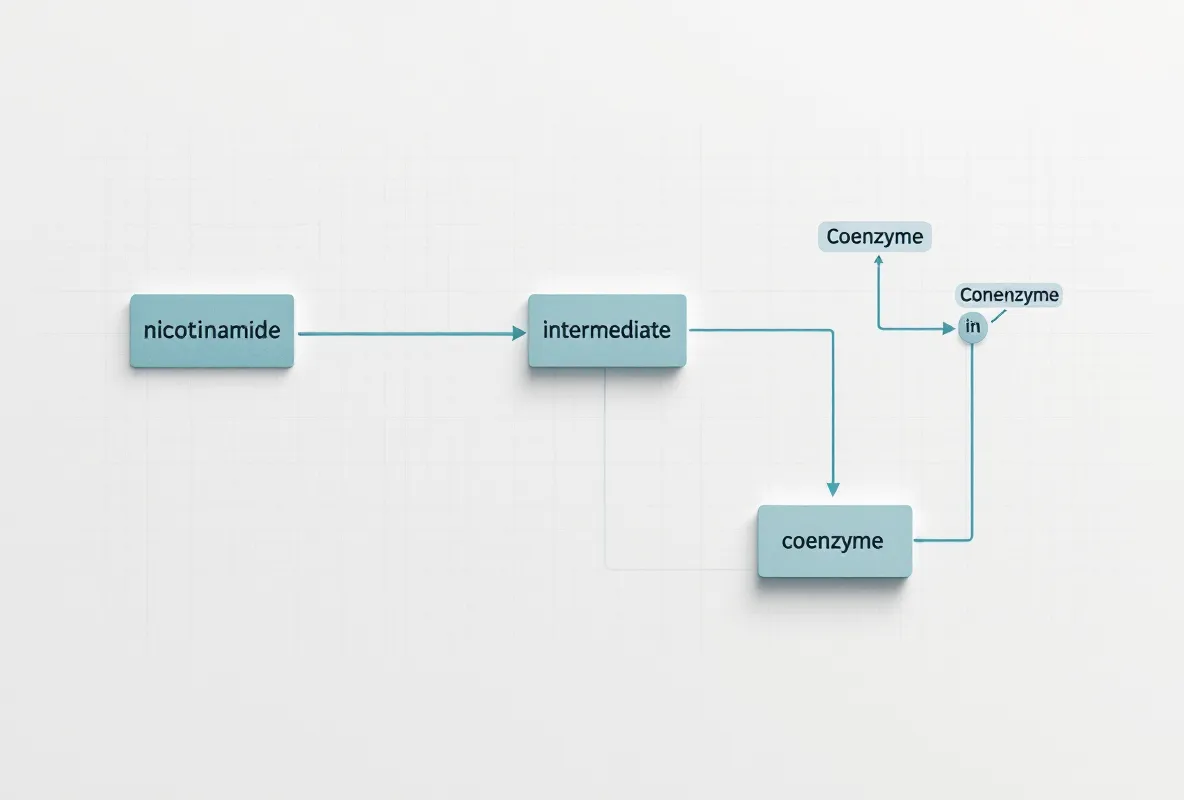
A different protein uses up more NAD+ in older cells [2]. Cells can make replacement NAD+ from the vitamin niacin in a form called nicotinamide [5]. Cells first change that vitamin into NMN, then into NAD+ [5]. NR goes through another change beforehand; that extra step isn't evidence of a better pill for you.
What happened to blood readings, walking and sugar use?
NR testing lasted 8 weeks; your risks over years remain unknown. Bad cholesterol didn't rise, and tests didn't show trouble using vitamins. Blood NAD+ rose 22% with 100 milligrams daily and 51% with 300 milligrams daily. At 1000 milligrams daily, the rise reached 142% [4].
The NMN trial compared 300/600/900 milligrams daily with placebo pills for 60 days. The placebo lacked NMN; neither participants nor staff knew which pill each person received. Blood NAD+ increased in each NMN group at days 30 and 60 [3]. People covered more distance during a six-minute walking test.
The trial's aging score stayed steady, but the tests behind that score aren't described here. That can't tell you how people looked or managed at home. Researchers reported no safety trouble and favored 600 milligrams daily after weighing blood and walking findings. Your treatment wasn't being chosen by those researchers.
Women past menopause near diabetes took 250 milligrams daily for 10 weeks [1]. Their muscles drew more sugar from blood with insulin's help. Weight, fat, muscle size and average blood sugar stayed unchanged. The muscle test hadn't shown lower sugar over recent months.
Runners received 250 milligrams daily for 12 weeks, with tests suggesting better oxygen use [7]. Older adults received 100–500 milligrams daily over 24 weeks [6]. Higher amounts gave bigger blood rises and better leg tests. Your gains at home remain uncertain.
What changed in the mouse and dish experiments?
The larger findings came from mice, whose results can't predict your own. Mice received 100–300 milligrams per kilogram daily over 12 months, with the amount based on each mouse's weight [8]. They gained less weight with age and handled energy and sugar better. Eyesight improved, bones had more tightly packed minerals, the hard material inside bone, and no harm was reported.
Another experiment tested older mice and mice fed a high-fat diet [10]. The researchers gave NMN at 500 milligrams per kilogram, based on the mouse's weight. NAD+ increased in liver and muscle, and the mice managed blood sugar better. Insulin also helped liver cells manage sugar better, but nobody with diabetes received treatment in this experiment.
Experiments in a dish tested mouse immune cells, which protect against germs [11]. Low NAD+ made those cells more ready to start inflammation; NMN reversed the change. In another experiment, material from bacteria triggered the cells and damaged their DNA [14]. Repairing that damage used NAD+, so the cells had to make replacements.
A 2024 study examined serine, an ingredient cells use to make proteins [15]. Mouse immune cells making serine had less NAD+ available. With less NAD+, the cells did less of the work that holds inflammation back. The cells kept producing a substance that causes inflammation; the study didn't test relief of your pain.
Did the muscle studies test strength or sugar use?
Yoshino's 2021 participants were near diabetes and past menopause [1]. The trial used 250 milligrams daily and tested sugar use, rather than strength. Researchers gave insulin, a hormone carrying the message that sugar needs to move from blood into muscle, and kept the blood sugar level steady by replacing the sugar removed. The need to replace more sugar showed that the women's muscles were taking more in.
Liao's 2021 study tested runners' breathing as treadmill exercise became harder [7]. Better oxygen use in runners doesn't establish easier daily walks for you. Kim's 2022 study reported better leg tests, including getting out of a chair, along with increased blood NAD+ [6]. Those tests didn't check whether people managed more comfortably at home.
Mice with diabetes-like illness had better sugar readings after NAD+ rose in liver and muscle [10]. Longer mouse experiments found better energy use and response to insulin [8]. Exercise in humans increased a protein that helps cells make replacement NAD+ [9]. A review couldn't establish that these findings meant fewer illnesses in people [12].
Why do longer-term health and cancer still need discussion?
Few studies clearly showed an age-related NAD+ fall in humans, the 2025 review found [12]. Researchers rarely checked NAD+ inside people's muscles or organs. Much stronger findings about aging came from experiments with rats or mice. Human blood tests improved, without firm proof of fewer diseases or longer healthy lives.
Cancer cells need NAD+ during growth too, which raises questions about increasing an existing cancer's supply [12]. The research hasn't established that these pills cause cancer or bring cancer back. When you discuss the findings, include your past cancer care. Your doctor can explain the unanswered questions about cancer already present or treated before, while weighing your history and the medicines you take now alongside any hoped-for benefit.